Friday, January 29, 2010

At the demanding 4. race of the German Cross Country Championship in the Franconian ADAC Motodrom in Höchstädt, Simo Kirssi on the BMW HP2 managed to convince even the very last sceptic. The flying Finn did battle the whole time in the top group of the Professional Class and rode to his first GCC series top ten placement among the high-calibre field of racers. And it could have been even better.

Franconian ADAC Motodrom in Höchstädt
Following an unusually poor start, Kirssi slotted in at twelfth position in the first round. In typical Kirssi style he did not go all-out right away to get to the front of the pack, but after a third of the distance played his best card, namely his consistency and physical condition, thereby leaving five further competitors behind him.Meanwhile Simo Kirssi has become a sympathetic figure in the GCC and the crowd once again carried him on a wave of excitement. Football-style "La Ola" waves accompanied the seemingly disadvantaged HP2 Enduro and its rider.

Simo Kirssi BMW HP2
The track was all but easy. Its heart-piece was a rock-hard cross track featuring murderous jumps. Then there was a big forest section with difficult root and stone covered uphills and downhills. At the bottom, the route took the riders across a slippery meadow.

modest Kirssi HP2
"This time everything was going quite well" said the modest Kirssi after the race. "The HP2 had to prove its all-round talent here today." In the course of the race the Finn had ridden up to 7. place. He couldn´t move much further ahead since the German Champion Arne Domeyer was already one minute out front. However, Kirssi was also almost a minute ahead of his pursuers. Then another stroke of bad luck threw him back. A technical defect on the rear suspension slowed him down so had to more or less nurse his bike to the finish line on the last kilometres thereby losing three places and valuable championship points.

At the next GCC race on July 17th, 2005 in Goldbach there will be a showdown. No less than the multiple Enduro World Champion Giovanni Sala on the 950 2-cylinder KTM will challenge the Finn on the BMW HP2 Enduro.

Thursday, January 28, 2010

2011 BMW 335is

It's fair to say that few automobiles have ridden atop their segment for as long as the BMW 3 Series has managed. Admittedly, there have been occasional frights from other German automakers or the odd Asian upstart, but it's as if Munich's engineers long ago brokered some sweetheart deal with the devil, so total has been the range's dominance. All of which has made it particularly tough for U.S. enthusiasts, as we've seen seemingly dozens of tempting higher performance specials and intriguingly efficient offerings pop up over in Europe and elsewhere, yet these models never seem to make their way into U.S. showrooms. Forgive us, then, for being slightly giddy at the prospect of this 335is, the first North American exclusive 3 Series in, well... eons.

Based on the freshly facelifted sixth-generation 3 Series, the 2011 335is will be available in both coupe and folding hardtop convertible forms beginning this spring – but we just couldn't wait that long to get behind the wheel. Thankfully, BMW was kind enough to slip us the keys to a pre-production example on Portugal's Estoril raceway as a dessert course of sorts at the launch of their new 5 Series sedan. Follow the jump to read our full slate of impressions.

Interestingly, having just sat through a press conference detailing the many virtues of the 5 Series' new 3.0-liter N55 single-turbo inline six, we were a bit surprised to hear that the 335is harbors a newly developed iteration of the "old" twin-turbo N54. Surprised, yes, but not disheartened, as we'd still happily get out of bed for an N54-powered waterpick.

BMW is positioning the 335is as an appealing option for club racers – presumably those who can't afford an M3 – and for those who normally raid the aftermarket's parts bin. To that end, Bimmer's boffins haven't just fortified the boost and left the rest of the drivetrain package to fend for itself – they've fitted a higher-capacity cooling fan, mounted a supplementary radiator behind the left air intake and bungeed an oil cooler on the right side for good measure. To take advantage of the system's more robust cooling capabilities, a resculpted lower fascia with bigger inlets has also been specified. And although our prototype tester doesn't show it, by the time they reach dealerships, BMW promises that only models with the folding hardtop will receive foglamps – the coupe's will have been purged in favor of larger air openings.


Thanks to those upgrades in cooling and better breathing, BMW has been able to ratchet up the boost to 11.6 psi (up from 8.7 psi in the standard 335i). Thus, as tuned for duty in the 335is, the N54 rustles up 320 horsepower (+20) and 332 pound-feet of torque (+32) riding atop stiffer engine mounts, with the added party trick of an overboost mode that maxes out at 14.5 psi, delivering 370 lb-ft for up to seven seconds.

That bounty is funneled out to the rear wheels through the buyer's choice of a six-speed manual or seven-speed Double Clutch Transmission (DCT), marking the first time that a twin-clutch gearbox has been offered in a non-M 3 Series. The same basic motor also appears in BMW's forthcoming Z4 sDrive35is, albeit conjuring up a sliver more power (335 hp/332 lb-ft.).


How will you spot a 335is on the street? Exterior changes include the updated head- and taillamps and restyled grilles that are shared with the rest of the 2011 3 Series range, but the 335is gets a few malefic telltales in the form of ferric gray 18-inch alloys, gloss black kidney surrounds and mirror caps, black window trim, a handful of special badges and most importantly, a pair of black chrome exhaust tips poking out 'neath a functional rear diffuser. BMW tells us that while the new exhaust system is less restrictive, they admit that by itself, it doesn't really do anything to further enhance the 335is' performance figures. No matter. What those charcoal pipes do accomplish is a heaping helping of aural engagement, sounding significantly huskier than a garden-variety 335i – even at tickover. Hearing the freer-breathing exhausts caroming around Estoril while standing in pit lane was enough to forgive the Portuguese day's unfortunate gray skies and oppressive dampness, and the added audio inside the car was an even more welcome treat.

Being holistic sorts, BMW has also firmed up the springy bits underneath to help deal with the 335i's added aggression. An off-the-rack M-suspension pack drops the ride height by 10 millimeters and stiffer shocks and springs have been substituted, all particularly welcome changes in light of the fact that we had only ever driven on the circuit once before – and that was the previous afternoon. Interestingly, at 13.7-inches up front and 13.2-inches out back, the brakes have been left alone, though we've never had reason to doubt the 335i's binders in the past.


BMW says that the upgraded engine hardware is good for 0-60 in as little as 5.0 seconds for a coupe paired to the DCT gearbox. Row the gears in the fixed-roof variant yourself and you're looking at a 5.1 seconds. The convertible is a tenth of a second slower, regardless of transmission choice. It's important to note that BMW has a history of underreporting engine power figures and being conservative with its performance estimates, and judging by the acceleration we felt under suboptimal traction conditions – and the fact that DCT cars will be equipped with launch control (something with which our prototypes were not yet equipped) – we're guessing that the 335is is actually capable of clipping 60 miles-per-hour about a half-second quicker than BMW is letting on. Regardless of whether you specify a fixed or folding roof, the 335is packs it in at 150 mph.

More important than raw numbers is the way the 335is feels and behaves, and in this regard, we've only whetted our appetites with a limited amount of laps at Estoril with both the DCT and manual (these prototypes were sadly not plated for street use). Even given our limited time and closed course conditions, we can tell you that we like what we see so far. The 3 Series has always had exemplary balance, and the 335is is no exception, only now it has significantly more power to lunge from the apexes. Out on the circuit, the surplus torque offered by the temporary overboost function allows one to gloss over most track virgin mistakes – braking too early (or too late), or taking a bad line through a corner, and even if you get it spot-on, you'll get there that much more rapidly thanks to the extra power. We're pleased to report that the DCT seems particularly well-suited to the 3 Series' character, and it's similarly fine work on the track, being quicker than the (still excellent) tripedalist setup, especially as it allows for both hands on the wheel at all times.


Speaking of the steering wheel, on the 335is, it's an M Sport piece, as is the shift knob and matching sport seats. Other model-specific frosting includes an anthracite headliner, stainless pedal pads and footrest, along with special badging calling out the model name on the dashboard, tachometer and door sills. Like all 335i coupes, this new model comes with a moonroof as standard fit, something sure to please sybarites but potentially aggravate those who don't want the extra weight and higher center-of-gravity on the racetrack. BMW promises us that it's considering making the roof a delete option, but opting out isn't likely to save any money.

Speaking of money, we note that when Autoblog first revealed the official specs and pricing of the 335is, many readers balked over the price tag: $50,525 for the fixed-roof and $59,075 for the drop-head, with both prices including destination charges. We won't argue that BMW's asking for premium dollars, nor will we debate that they can get jarringly expensive after visiting the options list. Even still, the 335is doesn't strike us as a bad deal when analyzing the rest of the 3 Series lineup.


Think of it this way: a 2010 M3 coupe starts at $58,400, to which you must add $875 for destination and a further $1,300 for gas guzzler taxes (a 2011 model has not yet been announced). Total cost? $60,575 – before options. Yes, the V8-powered M3 offers significantly more horsepower (414), but does so at a skyscraping 8,300 rpm and has a comparative dearth of torque – 295 vs. 332 pound-feet – and that's without considering the 335i's massive overboost. What's more, the 335is' full measure of twist is available from just 1,500 revs, while the M3's eight-pot needs to be spinning more than twice as fast at 3,900 rpm. Lest we forget, despite its carbon-fiber roof, it also weighs a smidge more.

Don't get us wrong – we love every inch of the M3's sniper-like precision – it remains a fantastic car and an unrivaled piece of trackday artillery. But out on the street, you really do have to rev the Mobil 1 out of the V8 in order for it to feel genuinely quick. That's not to say that doing so is a chore, but for many drivers, the high-revving soundtrack can get tiresome on a day-in, day-out basis and the M3's care and feeding aren't exactly cheap. The 335is offers club racer competence swathed in a more relaxed, more civilized package with comparable levels of real-world thrust – all while leaving a couple of vacations' worth of coin in your bank account.


On the other end of the spectrum, an unadorned 2011 335i coupe runs $43,525 (that's $42,650 plus $875 for postage and handling), meaning that it costs exactly $7,000 less, but that doesn't include the 335is' additional standard equipment like the $1,550 sport pack. By our count, the cost difference at that point is $5,450, an amount that strikes us as a distinctly fair tariff for the new model's additional performance and kit. (The convertible's pricing premium is admittedly rather harder to swallow, but the same tough math applies with the 328i and 335i).

The first wave of 335is convertibles is slated to hit U.S. dealers in March, with the coupes to follow in June. Here's hoping that enthusiasts line up to buy them – if only to give BMW executives a good reason to offer more high-po specials and foreign-market forbidden fruit in the States.

[Source: Autoblog]

Mercedes-Benz GL 63 by Brabus

The performance boffins over at AMG keep themselves pretty busy, churning out high-output versions of just about every vehicle in the Mercedes-Benz line-up. Just about, but not quite. For example, if you want a GL-Class family-hauler with the division's stonking 6.3-liter V8 engine, you're SOL. But that's where the aftermarket comes in, and Brabus has arrived at the scene to save the day. And then some.

Not only has Brabus fitted the 6.3-liter V8 to the GL, but they've bolted a pair of turbochargers in the process. And while they were at it, they tweaked the seven-speed auto-box, fitted a big water-to-air intercooler and upgraded the intake, exhaust, brakes, suspension and rolling stock. The result? 650 horsepower and nearly as much torque. That oughta be good for 300 kilometers per hour (186 miles per hour) and hitting 100 km/h (62 mph) in 4.7 seconds along the way.

The Widestar body kit also widens the vehicle's stance, while the interior has been tricked out in custom leather, carbon fiber trim and LCD screens aplenty to keep the kids busy while you focus on maximum velocity. The super-truck will be unveiled in a couple of months at the Geneva Motor Show, but is available for order now from €368,000 ($518k).

[Source: Brabus]

Tuesday, January 26, 2010


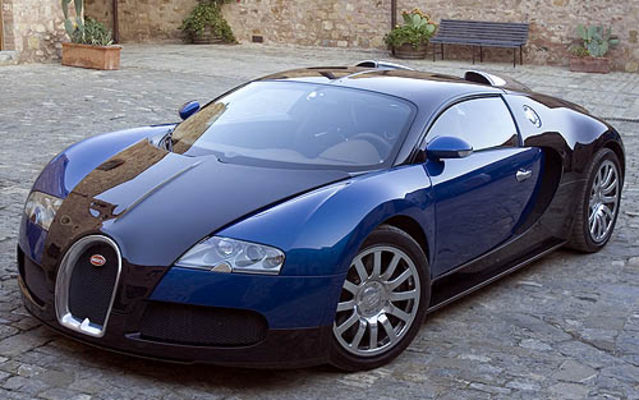
bugatti veyron


Bugatti Veyron
Bugatti Veyron
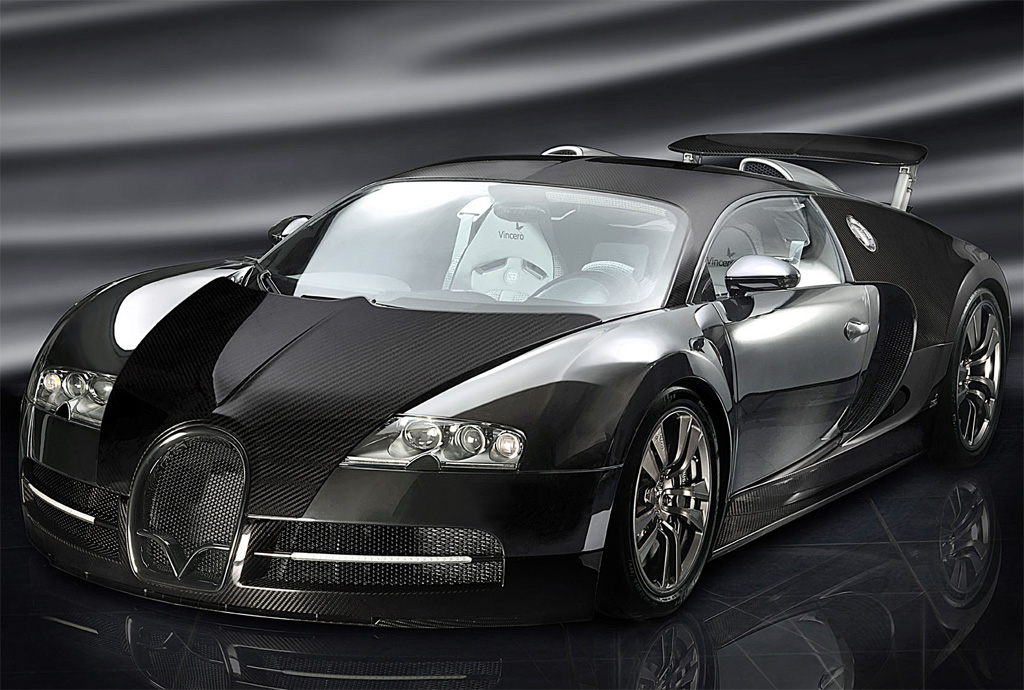
Bugatti Veyron Wallpaper

Bugatti Veyron Wallpaper
Bugatti Veyron Wallpapers

Bugatti Veyron Wallpapers
Bugatti Veyron Picture

Bugatti Veyron Picture

2010 Citroen DS3


2010 Citroen DS3
2010 Citroen DS3

The new Citroen DS3 will be available in Spring 2010. The expectations for this model are very big, because of innovate vehicle design and the new more powerful and fuel efficient engines. The 3 petrol engines are co-developed with BMW, which is a proof of excellence.

The two HDi diesels – a 90bhp and an 110bhp – are fitted with Citroën’s lauded DPFS (Diesel Particulate Filter System) and the three petrol engines – VTi 95, VTi 120 and THP 150 – are fitted with either 5 or 6 speed manual gearboxes.

The electronic systems will take care about your safety – ABS, ESP, EBD and EBA come in standard with every Citroen DS3.

At first glance it doesn’t look like Citroen C3, sport lines, aggressive front and back, big rims, sharp style. The DS3 will be more than little city car, it has its own style.

Citroën DS3 will be shown on September 15 at Frankfurt Motor Show for the first time.

The DS3 will be the first model from Citroën’s brand new DS line, a product range consisting of three distinctively styled, attention-grabbing models that highlight the very best of Citroën’s ‘créative technologie.’

With razor sharp styling and a visually-arresting design, DS3 is a radical take on the compact urban vehicle and a contemporary breath of fresh air for the class.

Designed to meet the requirements of even the most demanding connoisseur, DS3 offers an extensive array of style, personalisation and quality materials for a bespoke and refined driving experience, whilst at the same time embodying the very latest Citroën technology including fuel-efficient, environmentally-considerate engines.

STUDIO STYLING

Citroën’s creative talent for innovative vehicle design manifests itself on every feature of the DS3.

From all angles, the car’s undeniable on-road presence and refreshing style is evident with stand-out elements such as the colour-contrasted ‘floating roof’, ‘shark fin’ B-pillar and sleek design of the front LED lights – a desirable feature usually seen on premium models.

Inside, the atmosphere in the cabin is one of class and contemporary elegance with an exceptional attention to detail and an extensive use of luxury materials such as leather and chrome. The upper part of the flowing dashboard echoes the floating roof. Thermo-coated components are used throughout – an organic, soft grain material, which contrasts perfectly with the smooth, lacquered effect of the strip runs the full width of the dash from driver to passenger side.

“MY DS3!”

Offering freedom of expression, the innovative DS3 provides extensive levels of personalisation – both inside and out.

In addition to a range of body shades, the DS3’s distinctive ‘floating’ roof is available in a choice of four colours – Black, White, Blue and Red – to contrast with the main body of the car. The wing mirrors and rubbing strips can also be personalised in colours or smart chrome finish and the wheels and wheel centres are available in a wide spectrum of colours.

Inside, DS3 can offer further personalisation with the dashboard strip – which encompasses the air vents, instrument cluster, multi-function screens and even a scented air-fresher – in a choice of six finishes.

The modern seat upholstery design is available in a variety of coloured fabrics and leather; even the gear knob can be tailored in five different trims, combining satin-finish chrome with an array of colours and leather. The smart chrome touches which adorn the DS3’s cabin will also be available in a satin-textured finish. You can even carry a bit of your DS3 with you thanks to each distinctly styled DS3 key fob featuring a disc coloured to match your choice of body paint.

ENERGY AND ELEGANCE

Proving that environmentally-considerate motoring doesn’t mean having to compromise on style or performance, the DS3 will be available with a choice of five CO2-efficient Euro V power plants consisting of two HDi diesel units and three BMW co-developed petrol engines, combining refined performance with strong fuel economy.

The two HDi diesels – a 90bhp and an 110bhp – are fitted with Citroën’s lauded DPFS (Diesel Particulate Filter System) and the three petrol engines – VTi 95, VTi 120 and THP 150 – are fitted with either 5 or 6 speed manual gearboxes.

Fully in line with Citroën’s commitment to producing cleaner, more environmentally considerate vehicles, the two HDi DPFS engines will deliver ultra low CO2 emissions of just 99g/km and 115/g km, whilst the petrol units will emit between 136g/km and 160g/km.

LOST IN SPACE

Both enjoyable and easy to live with, the DS3 combines high-end style with practical versatility, creating an exceptionally spacious cabin out of its compact external dimensions – a Citroën speciality.

One of the smallest vehicles in its class – 3.95m long, 1.71m wide and 1.46m high – the DS3’s interior belies its neat frame, setting a new class standard for spaciousness. The result of extensive work on the architecture of the car’s interior design, occupants can enjoy levels of roominess normally associated with models in the segment above.

A ‘raised’ dashboard design creates increased amounts of front leg room whilst the slender front seats and intelligent rear design increases space for rear occupants with all passengers able to enjoy five full-sized seats and ample arm, leg and headroom.

The DS3 also boasts the largest boot in its class at 285-litres, and for additional load capacity the 60:40 split-fold rear bench can be tumbled forward in a single, effortless movement.

FUN AT THE WHEEL

A cockpit-inspired driving position puts the driver firmly in control with a sports-styled instrument cluster featuring three conical dials, small-diameter wheel and low-slung, body-hugging seats. DS3 delivers a nimble driving experience with a turning circle of around 10.3m also making it a surefooted companion for manoeuvring around cramped urban environments.

Building upon Citroën’s extensive experience in producing smooth running-gear, DS3 delivers impressive ride comfort together with responsive road-handling and dynamic poise. Drivers also benefit from excellent body roll control, responsive and confident cornering thus providing a secure and fulfilling drive.

I.C.E. COOL

DS3 is available with Citroën’s latest in-car technology such as the integrated MyWay satellite navigation unit which incorporates a sophisticated audio and multimedia system, wide format colour screen, MP3 and WMA compatible CD player and Bluetooth® hands free kit. Providing exceptional acoustic clarity, the audio system benefits from a third speaker in the middle of the upper dashboard as well as an amplified subwoofer mounted in the boot for a broader frequency response and immersive audio experience.

A convenient range of driving aids will also be available including cruise control with speed limiter, and an intelligent indicator which recommends the optimal moment for gear changes allowing drivers to improve their fuel economy and lower CO2 emissions.

PLAY IT SAFE

The DS3 is designed with an emphasis on robustness, strength and optimum safety to ensure protection for all occupants. For reassuring control in any driving situation DS3 models will feature as standard ESP, ABS with EBD (Electronic Brakeforce Distribution) and EBA (Emergency Brake Assist) as well as six airbags and Isofix anchor points on the rear side seats.

The DS3 will arrive in the UK in Spring 2010. ‘On Sale’ date, prices and further details on this exciting new Citroën model will be announced in the forthcoming months. The DS3 will join Citroën’s latest vehicle range as the Company continues its 90th birthday celebrations at the Frankfurt Motor Show which runs from 15th to the 27th of September.

2010 Citroen DS3
2010 Citroen DS3


2010 Bufori CS

Malaysian luxury car manufacturer BUFORI Motor Car Company (BMCC) is extending its model range and will soon be launching a new generation of modern sportscars.

The BUFORI CS, which stands for "Compact Sports", is a purist and powerful 2 door coupé. Unlike previous generations of BUFORI motorcars, the BUFORI CS is intentionally modern-styled. Powered by a 2.0L turbo-charged engine, the sportscar will feature a lightweight composite body and offer the typical BUFORI craftsmanship, attention to detail and quality. The BUFORI CS is expected to be launched in Malaysia at the beginning of 2010 and more details will be revealed towards the end of the year.
The BUFORI CS is fully designed and developed by BMCC in Malaysia. It was recently decided that BUFORI wanted to have a race version of the car, in order to prove the vehicles capabilities and performance under extreme conditions and directly apply proven racing technology to the on going development of the road car.

This lead to the creation of the newly established BMS (BUFORI MOTOR SPORTS), which is the motorsport division of BUFORI. Through the collaboration with AXLE MOTORSPORT, a company dealing in high-tech motor racing development, BMS and AXLE MOTORSPORT jointly developed the BUFORI BMS R1 using a team of Formula One engineers, employing only the highest quality components and materials.

The BMS AXLE RACING team will take part in the upcoming 56th Macau Grand Prix (weekend of 19th November 2009) with the BUFORI BMS R1, the race edition of the all new BUFORI CS.

"After two years of hard work in designing and developing our new sports car, the BUFORI CS, we are very proud that a racing version of our car has been developed and will have its first public appearance at such a prestigious event as the Macau Grand Prix. We could not have wished for a better occasion. Our intention is to transfer the racing technology to the road version of the BUFORI CS and bring in all the qualities for which BUFORI is renowned" says Felix Haller, General Manager Marketing & Operations of BMCC.

"BMS AXLE have followed a very tight working schedule, in under 10 weeks, to create this race car, and we are looking forward to being a part of this racing event and making history with BUFORI, the first Malaysian sportscar to run at the Macau GT Cup" says Joe Lim, the BMS Team Principal and Managing Director of Bufori Sales & Marketing (BSM), the global Distributor of Bufori vehicles. "This race marks the beginning of a new era for BUFORI. With the BUFORI CS, the company is expanding its portfolio to purist, modern styled sports cars, with the usual uncompromised BUFORI quality." he adds.
BUFORI is the first Malaysian manufacturer to participate at the Macau GT Grand Prix.

The Guia Circuit of Macau is a street circuit with a combination of fast straights and tight corners. It is recognised as one of the most challenging and demanding circuits in the world.
About the BUFORI CS

The BUFORI CS marks the beginning of a new era for BMCC.

Unlike previous BUFORI models, the design of the BUFORI CS is intentionally modern, boasting elegant flowing lines and subtly pronounced fenders. Four circular LED rear lights give an additional sporty dimension to the overall, timeless elegant body.

The monocoque body is made of ultra-light and rigid reinforced Carbon Fiber & Kevlar and lies on a space frame chassis.

The unequal upper and lower arm front and rear suspension with coil over shocks are fully adjustable and provide excellent road holding.

The BUFORI CS is fitted with a front mounted 4 cylinder 2.0L turbo-charged high performance engine that delivers effortless power and offers an exhilarating driving experience.

The BUFORI BMS R1, the race edition of the BUFORI CS, which is homologated to FIA GT3 requirements, was jointly developed by BMS & AXLE using a team of experienced Formula One engineers, employing only the highest quality components and materials. Besides building a competitive race car, the focus was put on producing an extremely light vehicle, with a very favourable power to weight ratio.

About BUFORI

The BUFORI MOTOR CAR COMPANY is a manufacturer of hand-crafted luxury cars combining modern technology with a timeless classic design. The company was established in Sydney, Australia in 1986 by the 3 Khouri brothers and is headed by its founder and chief designer, Gerry Khouri. The company moved to Malaysia in the 90's and is responsible for the design, development and manufacturing of the entire collection of Bufori motor cars.

BUFORI motor cars are painstakingly hand-crafted to international standards, using only the finest materials and the latest technology. Each vehicle is made-to-order and customised to the specific requirements of its distinguished owner.

The privately owned corporation is currently offering the BUFORI La JOYA, a contemporary classic two-seater coupé powered by a rear-mid-mounted 2.7L V6 engine with state of the art creature comforts and driver aids. New models such as the BUFORI MKVI & Bufori CS are in the pipeline and will be released in the near future.
About BMS

BUFORI Motor Sports, known as BMS is the newly established motorsports division of Bufori specializing in high-performance cars. BMS is created to market a range of high performance and racing editions under the BUFORI name plate. BMS aims to supplement the BUFORI vehicles portfolio with specially modified and customized higher performance models.

In comparison to regular BUFORI models, the BMS versions will be fine-tuned for the race-track. Aerodynamics, performance, stability and handling are specifically adapted for motorsports use.
About BSM

BUFORI Sales and Marketing (BSM) is the official exclusive worldwide distributor for BUFORI vehicles and merchandise. BSM plans to open a unique automobile boutique to showcase Bufori and BMS car models while at the same time providing a very intimate and luxurious sales experience. Plans to disribute cars in China, India, Asia and the Middle East are also under serious consideration.

2010 Bufori CS
2010 Bufori CS


FREE HOT BODYPAINTING | HOT GIRL GALERRY