|
|---|


Sunday, December 6, 2009

new Proton
This is probably the most anticipated car in the history that I have had this blog running, the car that will mark the retirement of the old Proton Saga and mark the beginning of a new saga in the history of Proton. It is what both we and Proton call “the People’s Car”.
It is the car that signifies Proton is going back to the basics and fulfilling its responsibility as the national car manufacturer to actually produce national cars that the majority of the people actually need – a cheap, economical run-about car with a sedan bodystyle.
That car is the new second generation 2008 Proton Saga, known to us for the past few months as the Proton BLM.

As most of you should know by now, the new Proton Saga was engineered from the Proton Savvy’s platform, by a team that was led by Proton engineers together with external consultants, including LG CNS. It was developed in a record period of 17 months from the design freeze stage to the SOP stage. It was designed to be a simple, affordable and practical entry level sedan. You could call it the people’s car if you wish, something the original Volkswagen Beetle was a long time ago.
Proton decided to do away with any attempts at making this car “different”, from the beginning it was decided that its design was to be smart and simple. The front features a hexagonal mesh front grille, swept-back headlamps, and prominent lower air intakes on the bumper, while the rear of the car features wraparound crystal cluster lights and a concave boot lid. From the side you can see prominent wheel arches, which give the car a sportier look.
Thankfully, there are no design quirkiness to be seen, and the car lacks the typical hatch turned sedan awkward look that the Suzuki Swift Sedan and the Nissan Latio have.
For a small sedan like the Saga, what many will be looking at is how much interior space it has. So let’s have a look at how the new Proton fares in that area.


The new Proton Saga is bigger than its predecessor in pretty much every way possible. You’ll probably be able to guess what cars Competitor M and Competitor V are. Numbers are good, but they remain just figures on a piece of paper until you actually try getting into the car.
Click to enlarge
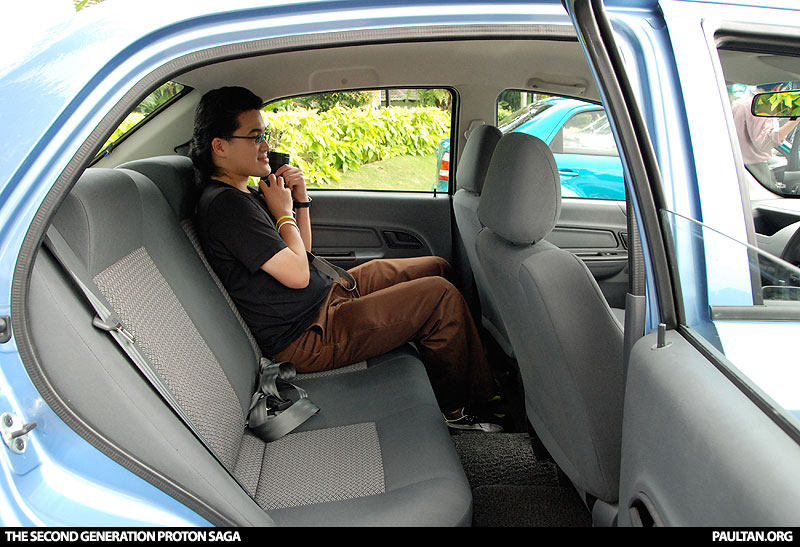
Here we have regular PAULTAN.ORG contributor Shannon Teoh in the rear seat of the car. You can see clearly the legroom and headroom available to the rear passenger – surprisingly good! The only concern would be the width of the car, it is narrower but acceptable given that this is a small B-segment sedan.
Either 2 adults or 3 children will sit comfortably in the rear bench, and there are seatbelts for 3 people, so if the government enforces the rear seatbelt rule anytime soon, the Proton Saga will be ready for it.
Click to enlarge
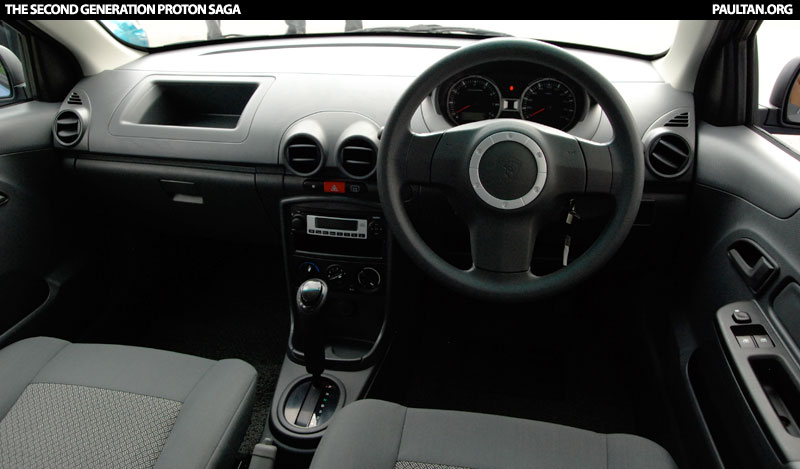
Interior conveniences include two cupholders in the front, one cupholder in the rear, an open storage compartment where the passenger airbag would be expected to be, a glove compartment, two rear bottle holders, door pockets on each door, seatback pockets, a 1-DIN storage area below the 1-DIN CD player, and finally a little compartment just below the steering wheel column.

The air conditioning controls themselves (click image on the left to enlarge) are very simple and intuitively designed. This is an improvement over the Proton Persona’s air conditioning controls where the temperature dial was somewhat confusing. Previously readers who have seen the dials have said they look like they were recycled from the old Mitsubishi-generation Protons, but these are new stepped dials. I’m not sure what the proper term is, but it means that when you twist the dial, you feel feedback from the dials, they “click” from setting to setting, while the old dials in the Saga/Iswara/Satria/Wira were stepless, you just twisted them around and they don’t give any feedback as to whether you’ve actually achieved anything or not.
The only stepless dial is the one where you control whether the air conditioning system recirculates the air or takes in fresh air from outside. This has been made into a dial instead of a button of sorts because the control actually requires the action of you twisting the knob to close the external air intake vent – basically its a manual system.

The air conditioning vents integrate angle and open/close functions in a single action, much like the ones on the Satria Neo. The dashboard plastics do not fall into the soft touch category, but Proton has added texture so that they do not look or feel cheap, and I appreciate that thought. I do not really have a problem with the plastics. The stepped dials and switches do not have a cheap feel to them, and all of them provide feedback as to whether you’ve actually pressed them, which is an improvement over the Persona’s feedbackless dashboard buttons.
The switches, knobs and dials are all placed in intuitive positions. My only issue with the interior is not something major. It’s just that Proton does not seem to have a standard Human Interface Design template for their interiors. A little button with a dot on it activates the central locking system in the Proton Persona, but the same button in the Saga is used to deactivate the alarm system! The same design, but different meanings in different cars. This will have to change in the next generation of cars.

Audio is provided by a single CD Clarion head unit, and either 2 speakers for the N-Line and B-Line, or 4 speakers for the M-Line. The silver head unit lights up with red backlighting, matching the rest of the car.
I wish Proton has specified to Clarion that the volume knob be on the right side of the head unit instead of on the left, as this is a right hand drive market. If you notice, the Clarion 2-DIN head unit used in the Mitsubishi-generation Protons and the Waja had the volume knob on the right. Nevertheless, the audio output through the speakers was rather decent, but being a 1-DIN unit there will be many who will swap everything out for their own custom ICE setup.
I am not completely sure, but I reckon that if you take out the 1-DIN storage compartment module from below the 1-DIN head unit, you’ll probably be able to install a 2-DIN unit.
Click to enlarge
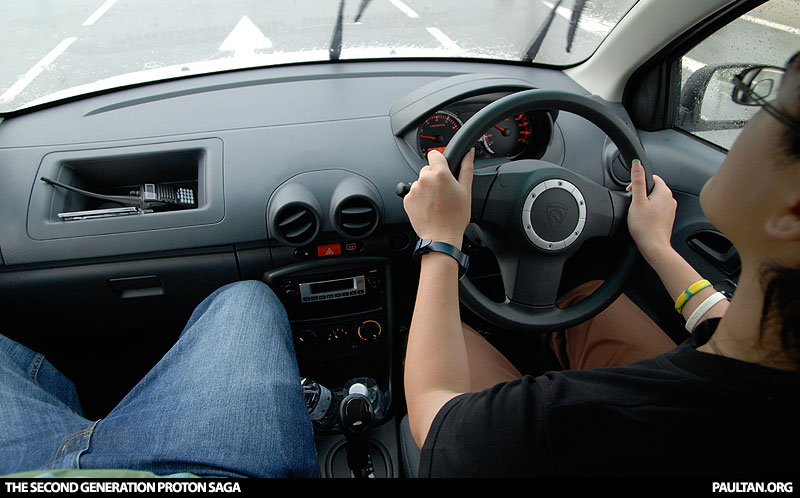
The picture above shows how the front passenger area of the Proton Saga would typically be looking like. The passenger’s legs are in the photo to let you judge the interior width of the car better. The driving position for both the manual and automatic versions were decent without issues.

The manual shifter is really something I’ve never seen before! The shift lever is so tall and the shift throw is rather long. The high position of the shift knob shortens the distance your hand has to travel from steering wheel to shifter, so many it was intentional. The lever’s free play both in neutral and in gear was also quite noticable, and it all reminded me of a pickup truck’s manual shift lever, although the lever did not vibrate like how a pick up truck’s normally would. Shifts felt rubbery and disconnected, not very fun but nevertheless it gets the job done.
Clutch engagement and disengagement for the manual transmission happens quite far into the clutch release. It should be quite safe if you accidentally shift without pressing the clutch pedal to the very deepest, as somewhere past mid point the clutch would have already fully disengaged.
Click to enlarge
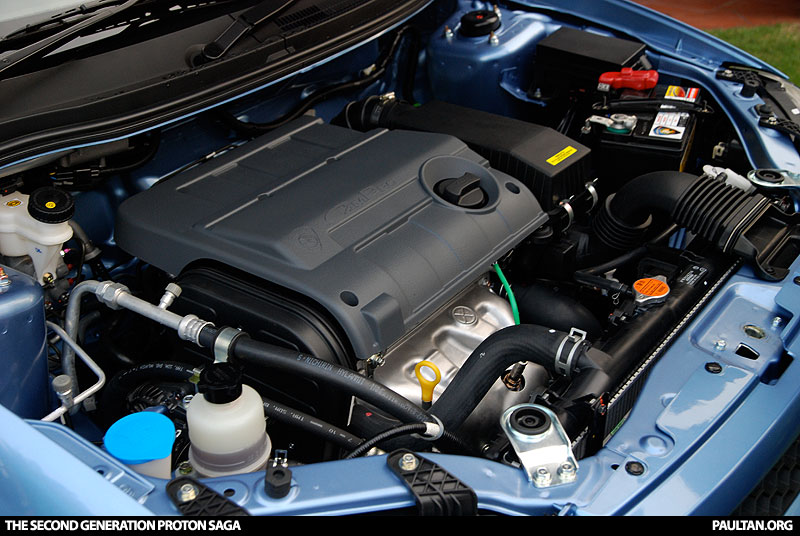
On to the new Proton Saga’s best kept secret. The new 1.3 liter Campro IAFM engine. Let’s get to the low down on whats changed since the last iteration of the Campro 1.3 found in the Proton Satria Neo. Firstly, the manual gearbox that comes with this engine is now sourced from Aichi Kikai instead of Mitsubishi, which Proton engineers say allows them greater flexibility in specifying gear ratios, something that Mitsubishi did not provide.
Next, the engine has an Integrated Air Fuel Module which integrates a variable length intake manifold system. I will not go into lengths explaining what a variable length intake manifold system is since I have already done that before (click here to read).
The electrical system has also been updated. Ignition now uses coil-on-plug ignition, which eliminates spark plug cables from the ignition system. This eliminates some power losses caused by spark plug cables. The starter is now of a smaller physical size, but has a bigger capacity. If you listen to how this Campro IAFM 1.3 engine starts compared to the Campro 1.3 in the Satria Neo, you can hear the difference. Think of how the Perdana V6 sounds like when it starts.
The Campro IAFM engine keeps the Campro 1.3’s 94 horsepower at 6,000rpm and 120Nm of torque at 4,000rpm figures, with changes only to the way the power and torque is delivered instead of any change in the peak power and torque. Proton’s dyno tests of the new Campro IAFM engine reveals power ratings of up to 98 horsepower is achievable, but Proton prefers to publish the power figures in brochures at 94 horses for some reason, perhaps for consistency sake as not all engines may be able to achieve the 98 horses figure.
 Proton 08
 Proton 07
 Proton 06
 Proton 05
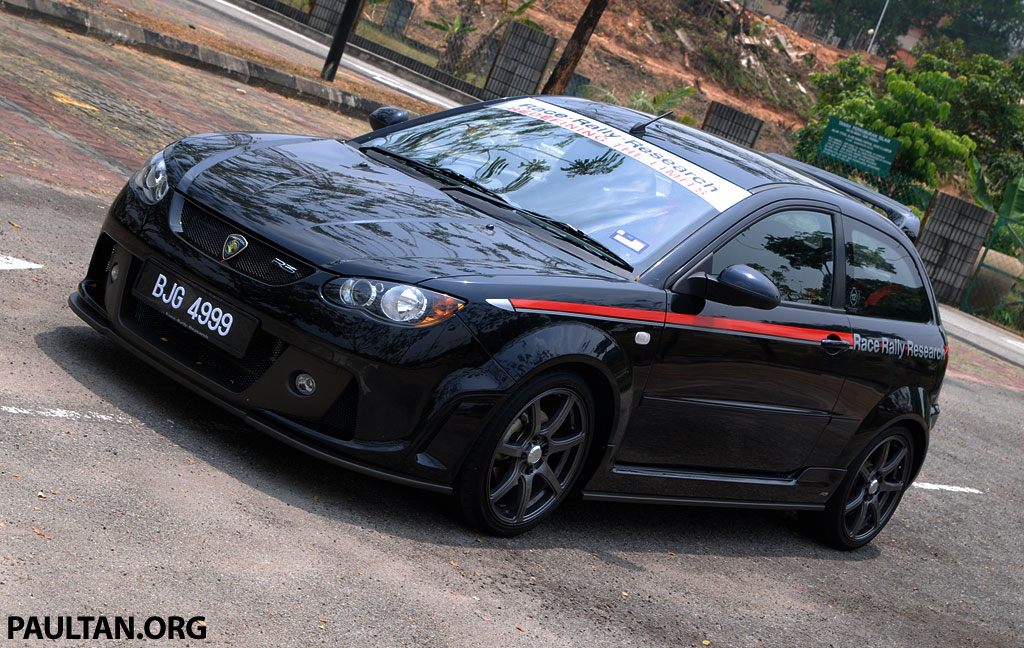 Proton 04
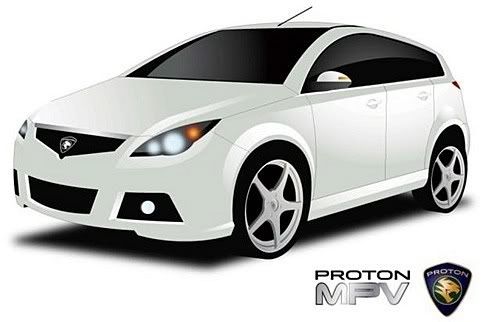 Proton 03
 Proton 02
 Proton 01
 Proton
The Royal Naval Air Service had raised the first British armoured car squadron during the First World War. In1914 all available Rolls Royce Silver Ghost chassis, including their engines whose power had increased to about 80 hp and were requisitioned to form the basis for this new armoured car.
Rolls Royce Cars was introduced first time on 4th May, 1904 by Frederick Henry Royce and Charles Stewart Rolls. In December 1904, the company had incorporated in an International market exhibiting two, three and four cylinder cars. In 1907, Rolls Royce had emerged with its new baby unit named Rolls Royce Silver Ghost.
On 3 December 1914, the first three vehicles were delivered, by then the mobile period on the Western Front, where the primitive predecessors of the Rolls-Royce cars had served, had already come to an end. Chassis production was suspended in 1917 to enable Rolls-Royce to concentrate on their aero engines.
 Rolls-Royce 10
 Rolls-Royce 09
 Rolls-Royce 08
 Rolls-Royce 07
 Rolls-Royce 06
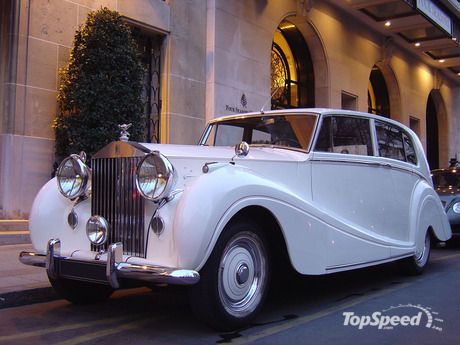 Rolls-Royce 05
Rolls-Royce Motor Cars has hand built 25 Bespoke cars called Phantom Black. These special cars demonstrate the best in Rolls-Royce design, engineering and craftsmanship and emphasise the Phantom’s impressive performance and dynamic character.
High lustre metallic Diamond Black paint is used on the body, complemented by twin silver coach lines. 21-inch alloy wheels come fitted with high performance Goodyear run flat tyres and feature unique black detailing and centre caps with RR badges, engineered to stay upright even at speed. At the rear of the Phantom Black, visible tail pipes hint at the car’s performance. Under the bonnet the 6.75 litre V12 engine has been treated to gloss black inlet manifolds, chrome plated top covers and new black Rolls-Royce badges.
The near silent motor provides 453bhp, enough to propel the Phantom Black from 0-60mph in just 5.7 seconds and on to a limited top speed of 149mph.
Inside, soft black leather upholstery is edged with Seashell piping. Black ash wood veneers are used throughout and while dark in finish, still allow the natural grain to show through. A silver pinstripe adorns each door capping. The dashboard is finished in special black metal foil with a finely embossed diamond pattern. A slightly thicker rimmed steering wheel adds to the dynamic spirit of the Phantom Black.
Graeme Grieve, Sales and Marketing Director, Rolls-Royce Motor Cars, said, “Phantom Black uses a number of new Bespoke finishes and materials to create a contemporary car that blends aesthetics and engineering, emphasising the dynamic character of the car. Rolls-Royce 03

The vehicle was modernized in 1920 and in 1924 which resulted in Rolls-Royce 1920 Pattern and Rolls-Royce 1924 Pattern. In 1940, 34 vehicles served in Egypt with the 11th Hussars regiment had the “old” turret had replaced with an open-topped one carrying.303 inch Bren machine gun, a Boys anti-tank rifle and smoke grenade launchers.
Buying any Rolls Royce is royal experience and an exceptional. Any product of this company is manufactured by combining advanced technology and visionary engineering with hard craftsmanship and the finest materials. All Rolls Royce products are unique blend of refinement, opulence, dynamism and quality.
More than seventy years ago, Rolls Royce Motors had introduced its first Aero-engine to India. In the year 1956, the company had a tie-up with Hindustan Aeronautics Limited (HAL) in Bangalore, as a license production partnership, is from 1956. Rolls-Royce Limited had been nationalized in the year 1971. Rolls-Royces have been used in popular culture as a stereotype of wealthy people, particularly millionaires.
HUMMER HX concept will be revealed at the 2008 Detroit Motor Show. HUMMER HX concept is an entry-level HUMMER designed to appeal to the younger buyer. The HUMMER HX is considerably smaller than previous offerings from the brand associated with oversized 4×4’s patrolling suburban neighborhoods, and is aimed at other “lifestyle 4×4’s” like the Jeep Wrangler and Toyota FJ Cruiser.

Hummer 6
All HUMMER’s bold styling cues appear on the HX concept including squared off wheel arches, the domineering chrome grille, removable slanted rear roof, and upright windscreen.
“The HX is HUMMER’s vision an agile, trail-ready, open-air vehicle that fits the lifestyles of everyone who needs or wants to drive off road,” said Martin Walsh, HUMMER general manager. “Of course, it carries exceptional off-road capability and the distinctive styling for which all HUMMERs are known.”

For an open air driving experience the HUMMER HX is able to shed its doors and roof to allow the elements in. The HX also was designed with several roof assemblies, allowing the vehicle to be configured as an SUT (with the roof assembly removed), a slant-back or a traditional, wagon-like design that offers a bit more cargo space.
The design of the HUMMER HX was driven by input from three young designers who were new to GM and the HUMMER design studio. As part of their “initiation”, they were charged with developing concept drawings for a smaller, youthful HUMMER and the HX is a direct result of their creativity. The HX concept is based on one of the designers’ original illustrations, but incorporates the best ideas and elements from the other designs.

The interior design of the HUMMER HX drew inspiration from aircraft interiors. “Aeronautical parts are designed to be both lightweight and strong, and that is the feeling exuded by the HX’s cabin,” said Stuart Norris, interior design manager. Furthering the aeronautical influence is the instrument panel, which uses an exposed, extruded aluminum cross-vehicle beam as its foundation. On the beam, the instrument cluster and other vital controls are mounted; and it also features a unique, removal top cover that provides significant storage capability.

Hummer 3
 Hummer 2
 Hummer inside view
 Hummer inside
 Hummer accedent


Friday, December 4, 2009
Before we begin, we have to state up front that we've rarely – if ever – had more fun with a car than we had with the Hotchkis E-Max Challenger. And the loud yellow Dodge was in our possession for maybe five hours. Why are we cutting to the chase like this? Why not structure this review like any other and start with the basics, describe the vehicle and then state a conclusion? First of all, just look at the bloody thing: "dripping with sex" is the only proper description. But the truth is that this is more the recounting of an adventure than a plain old car review. Keep reading. You're going to have some fun. Though not nearly as much fun as we did.
This is the type of experience that as a journalist you undeniably have to go through.
But yes, we should start with the basics. Legendary suspension tuner Hotchkis took a 1970 Dodge Challenger with a 340 six-pack and built themselves an autocrosser. The list of modifications is not only the stuff of which jealousy is made, but exhaustive. Though, Hotchkis claims the E-Max isn't so wild, "Even in Auto-Cross trim, E-Max is a relatively stock vehicle compared to many of the auto-cross competitors." Good to know. That said, it's still a long list.
Here's some of it: Custom Moroso oil pan, Be Cool aluminum radiator, Red Line synthetic oil, Optima Battery, MSD ignition, Classic 5-Speed Tremec TKO, Flowmaster exhaust, Stoptech brakes, Forgeline wheels and Yokohama tires, Sparco Milano 2 seat (as in just the driver seat), Hurst Shifter. Not bad, right? Then you got all the Hotchkis stuff that lies beneath, including tubular A-arms, front and rear sport sway bars, subframe connectors, sport springs, adjustable steering rods with a fancy Flaming River power steering unit and adjustable strut rods. Says Hotchkis of their handiwork, "The bolt-on system creates a proper negative camber curve, sufficient positive camber for high speed stability and full bump and droop travel without bumpsteer. Prototype Hotchkis-Afco adjustable stocks provide high performance damping." Got it? Good – let's get to the story.
Considering my job is what it is, I get many cars delivered to my house. And some of them are pretty dang fancy. But the E-Max Challenger is the first vehicle I've ever heard coming from down the block. I should probably explain that I live four flights up in an isolated little bohemian bungalow north of Downtown Los Angeles – i.e. I can't hear anything. But oh lordy did this puppy rumble. Er, burble. Well, burble and rumble and bark and growl and just basically kick the dead out of bed. The seemingly 70-feet long Hooker Competition headers certainly contributed to the cacophony, as did the shortened side pipes.
The boys from Hotchkis handed me the keys and I just couldn't stop smiling. Really? Somebody just showed up and handed me the keys to this? What did I do so right in a former life? Climbing into the sport seat and buckling the lap belt brought me back. I've been here before, strapped inside old Detroit iron. But something is different. I can't put my foot on it – until I did. These are not your father's muscle car pedals. The clutch feels light and modern. The throttle is, well, responsive. And instead of the boot-in-mashed-potatoes feeling that most old Mopars give off, the brake pedal is firm and reassuring. Oh boy. Tooling around the 'hood a bit I'm slightly amazed at how much the bright yellow Dodge feels like a go kart. A gigantic go kart, but a go kart nonetheless. Blame the teeny diameter steering wheel, tight shocks and instant torque. Oh, and I never for one half second stop smiling.
Due to our ridiculous travel schedule, this day was the only day until early December that both myself and Drew Phillips would be in LA at the same time. Meaning that it was our only chance to drive and shoot the car together. Seeing as how standing around while Drew works his magic is thirsty work, I performed my now usual pre-photo shoot routine of stopping at the gas station/car wash to buy some Gatoraid. As I roll up (still smiling) everyone is just staring at me. OK fine – the car, but still – they're really taking a gander. Now, I've rolled into this same gas station in everything from a Nissan GT-R to an Aston Martin DBS and the masses' reaction is typically, "Meh." Not with the E-max. After hearing half a dozen, "Man, this thing is awesome!" I'm off, the big stupid smile still draped across my face.
To get to Drew's place in Pasadena I have to make my way up the old, curvy part of the 110 and it's an ideal place to check out a car's handling on some moderately twisty tarmac. What was going on here? This is a near 40-year-old American car. Where's the waft? The body roll? The wallow? The bad behavior? All of it is just absent. The big yellow Hotchkis car rides hard and its rear end makes some peculiar sounds over bumps, but this is unbelievable. Turn in is crisp, it goes where you point it and there's even a minor sensation from the steering wheel resembling feedback. Couldn't be, could it? Could they have done this good of a job? Let me also point out that every driver on the freeway is staring at me. Er, at the Challenger. And you'd better believe I'm still smiling.
I pull up and Drew pops his head in the cabin with an even bigger grin. The charm this E-Max exudes is intoxicating. Not only that, but it makes the driver feel incredibly special. Again, just look at it (and I wish you could listen to it). No matter what car pulls up next to you, your ride is cooler. End of story, there simply is no competition. And on a certain level, that's really what the muscle car zeitgeist is all about. Just cold cruising down the boulevard looking better than everyone else and feeling great while doing so. You simply don't get that sensation with the bulk of modern cars. You know what? Let's just say all modern cars. I mean, a Lamborghini Gallardo is cool and all, but let's not kid ourselves.
We blast down the on ramp onto the freeway and I can hear Drew giggling. Well, more like unable to control his hysterical laughter, which is all the more funny because I'm doing the exact same thing. The Hotchkis Challenger is no faster than say a WRX, but the excitement, the pleasure, the sheer titillation of the Mopar makes the Subaru feel like a busted Segway. And I own a WRX. This could be one of those you-had-to-be-there-moments, but we had more fun getting up to 80 mph than, well, let's just say ever. The sounds, the sensations, the electricity – it's simply overwhelming. Fantastically so.
Of course, being such a complete car, we do get the full muscle car experience. Our location is over 30 miles away and we're in a four-decades-old car in late afternoon heat on a not exactly glass-smooth surface. There's nothing even resembling air coming out of the vents and with the windows down, I'm unable to talk to Drew without shouting. Windows up and it's really hot. The rumble from the 340 is just outstanding, however, and I find myself downshifting into fourth just to hear it scream a little. And at modern freeway speeds, even with all the good chassis stuff underneath, this Challenger's a bit of a handful. But for the most part the two of us remain grinning from ear to ear.
We get to our spot and Drew tells me that he wants to do some panning shots. Translation: he wants me to drive back and forth on a nearly abandoned road as he snaps away. My pleasure, and as I make my first few passes wide open in third gear I can't believe how lucky I am. This is my job. I'm actually getting paid to act like a zit-addled teenager with daddy's ride (or at least, someone else's car). It's just unbelievable. Totally, amazingly unreal. Drew motions me in. He's having some trouble with his autofocus and wants to swap lenses. He gets new glass from the trunk and I give the E-Max a little gas, ready to restart the misbehaving when she stalls.
I twist the key and nothing.
No crank, no tick, no turning, no nothing. Dead. The Challenger is dead. Kaput. A non-starter. But mostly dead. What happens next is rather embarrassing and points to the old adage that those who can't (wrench), write. I'm convinced it's the starter. Or the coil. Or the distributor. Or the points (totally oblivious to the bright red MSD ignition pack bolted to the far side of the firewall). At any rate, in my mind it's something electrical and catastrophic. The dome light is still coming on and the headlights work, and a few of the aftermarket gauges are still getting juice – indicating to my know-very-little mind that the battery still has plenty of power. We try arcing the battery relay. We get spark, but no start. We pathetically try push starting it in first gear. Then, realizing that high compression motors need more speed, a little faster in second. Nada. Literally nothing.
After a series of seemingly never ending phone calls between us, Hotchkis and the PR agency that set the whole thing up, it's decided that the super friendly (and quite lovely) PR lady would come out and give us a hand. Why? She owns a 1970 Dodge Challenger and is therefor familiar with their quirks and eccentricities. She's at least 30 minutes out and Drew suggests we get in the car because the sun's down and it's getting cold up here at the edge of the desert. Naturally, we're both wearing flip flops. I point out that sitting in a busted car on the side of the road is not exactly safe. On cue, we hear coyotes begin their nightly howls. And in case you're wondering – yes, we're still smiling.
Eventually, Elana the PR person and her friend Tom pull up in a big, burly Cummins Ram pickup. I explain my electrical gremlin theory but they want to try simply jumping it. Five minutes later, the Challenger roars back to life. Tom whips out his multi-meter and checks the charge: 11.98 volts. We then test the alternator – not a single volt. Ironically, the only OEM part Hotchkis left mounted to the block had died after 39 years. Tom put the meter back on the battery and we watched in something resembling horror as the voltage ticked down. 11.96, 11.95, 11.94 and so on. "Think we can make it to Pasadena?" I asked. "Probably, but you'd better get going."
Long story made short, we got. Drew and I are now racing not only against a lame battery, but any cop that might yank us over for having pathetic headlights. Almost truthfully, we'd have had more light if I stuck Drew out on the hood holding a lighter. The ride back is tense (yet still fun) and I explain to Drew that this is the type of experience that as a journalist you undeniably have to go through. Sure, we could have wimped out at any point and called AAA for a flatbed, but for a litany of ineffable yet cosmic reasons, we have to see this one through. After all, it's our job to do so.
Beaten, exhausted and yet still fully giddy from the nerve-wracking ride home, we (finally) turn onto Drew's street where we decide that we'll stash the car until Hotchkis picks it up in the morning. Because of street cleaning we have to park the Challenger on the opposite side of the road, requiring a U-turn. I nose the yellow, crippled beast into a driveway for a three-point turn. "Wouldn't it be hysterical if it broke down right here?" Drew asks maybe two or three seconds before the car dies again. Still laughing (and now blocking two lanes of traffic) we jump out of the Dodge and begin heaving. A driver from a passing car that we've held up is kind enough to climb out and give us a hand. Five minutes later (you try turning that wheel!) and the Hotchkis E-Max Challenger is safely resting for the night.
On the ride home both Drew and I are still cackling like seventh graders, wistfully reliving the evening's events. We are in total agreement – this car is fun. And thankfully, for Drew at least, he'd get to do it all over again because we simply didn't get enough photographs. Speaking of which, when the E-Max first showed up I snapped a photo with my phone and sent it to Facebook. It's now about 10:00 pm and a gearhead pal of mine texts me asking if I will come give him a ride in the Challenger. I reply that no, sadly the alternator's dead. Not going to happen. He writes back, "Dude – Autozone is still open. Let's fix it!" Looking back, I really wish we had because man, what a wonderful, fabulous, outstanding machine.
[Source: Hennessey Performance Engineering]


Wednesday, December 2, 2009
There are different types of race cars for different types of races. Race cars for races such as formula one racing, street car racing, Touring car racing, Production car racing, One-make racing, Stock car racing, Rallying, Targa Racing (Targa Rally), Drag racing, Sports car racing, Off-road racing, Kart racing and more are different and must be designed accordingly.

top racing car image

A hot race car

Audi racing cars picture

a good looking racing car

Race car